
News
Lac Hong University hosts workshop on Sharing experiences and Best Practices in Sustainability Impact Ratings and QS Rankings
On July 10, 2026, Lac Hong University organized a hybrid workshop titled “Sharing experiences and Best Practices in Sustainability Impact Ratings and QS Rankings.” The event was held both in person and online via Zoom. The workshop provided a forum for government regulatory agencies, Vietnamese higher education institutions, international universities and education cooperation networks to exchange expertise in data governance, share best practices in advancing the Sustainable Development Goals (SDGs), and improve institutional performance in international university rankings.
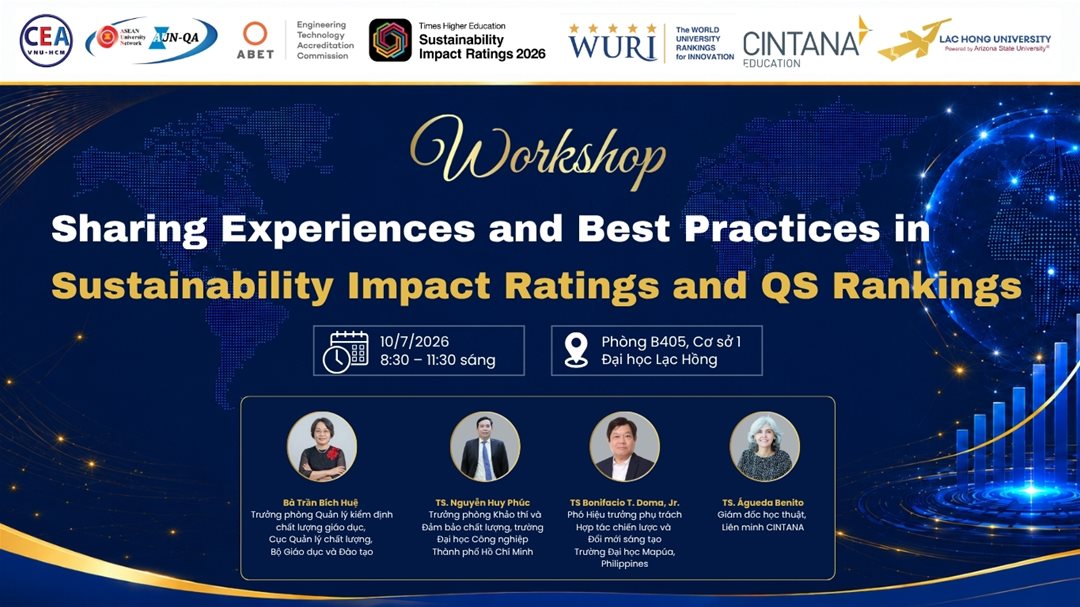
The featured speakers included Ms. Tran Bich Hue, Head of the Educational Quality Accreditation Management Division under the Vietnam Education Quality Management Agency, Ministry of Education and Training; Dr. Nguyen Huy Phuc, Head of the Educational Testing and Quality Assurance Office at the Industrial University of Ho Chi Minh City; Dr. Bonifacio T. Doma Jr., Executive Vice President for Strategic Partnerships and Innovation, at Mapúa University in the Philippines; and Dr. Águeda Benito, Chief Academic Officer of the CINTANA Alliance.
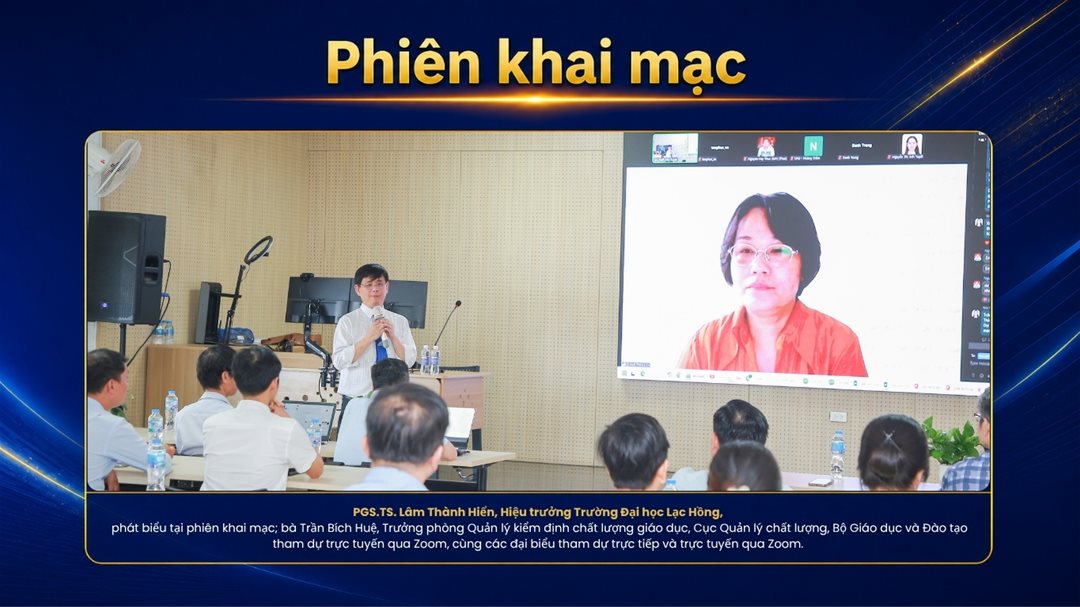
Opening the workshop, Assoc. Prof. Dr. Lam Thanh Hien emphasized the importance of international university rankings in enhancing the quality of education, research and global integration among higher education institutions.

Rankings Begin with Genuine Quality
According to Ms. Tran Bich Hue, Head of the Educational Quality Accreditation Management Division under the Vietnam Education Quality Management Agency, Ministry of Education and Training, international university rankings should not be viewed as the ultimate goal. Rather, they are the result of institutional quality, innovation and international integration. Rankings do not create quality by themselves. Instead, they reflect how an institution’s education, research and governance systems operate. From this perspective, quality assurance and accreditation provide the foundation, while university rankings allow institutions to benchmark their position, identify their strengths and determine areas requiring further improvement.
One of the key requirements discussed at the workshop was the transition from collecting data solely for reporting purposes to managing and analyzing data for institutional decision-making. Data dashboards and digital technologies can support monitoring, forecasting and early-warning systems. However, their effectiveness ultimately depends on data quality and human accountability. Internationalization should also be measured through tangible outcomes such as joint research, faculty and student exchanges, collaborative academic programs and international scholarly networks, rather than being limited to signed memoranda of understanding.
Data Must Become a University Management Tool
Drawing on the experience of the Industrial University of Ho Chi Minh City, Dr. Nguyen Huy Phuc highlighted the challenge of institutional “data silos.” In many universities, each faculty, department or administrative unit retains only part of the institution’s information, while data definitions, reporting templates and calculation methods remain inconsistent. When universities need to prepare reports or conduct international benchmarking, even minor discrepancies can create significant pressure for staff responsible for collecting, verifying and documenting institutional evidence.
The proposed solution is to develop a centralized university data management system based on three pillars: people, processes and tools. Regarding people, universities need to clearly identify who creates the data, who verifies it, who approves it and who is ultimately accountable for its accuracy. Regarding processes, institutional units must agree on common definitions, calculation methods, reporting templates, data collection cycles and submission deadlines. Regarding technology, data dashboards can help institutions monitor key performance indicators, identify areas that have not met their targets and enable university leaders to make timely adjustments. Data, therefore, should not simply serve as a mirror reflecting past performance. It should function as a navigation system for university governance and strategic management.
Lessons from Mapúa University’s Ranking Journey
Dr. Bonifacio T. Doma Jr., Vice President for Strategic Partnerships and Innovation at Mapúa University in the Philippines, shared the institution’s journey from a period when its international research presence remained limited. Mapúa University established specific objectives, carefully examined international university ranking criteria and developed a long-term roadmap instead of relying on short-term solutions.
The university partnered with research-intensive institutions, particularly universities in Taiwan, to provide faculty members and students with opportunities to participate in research internships, academic programs and joint writing projects with international scholars. High-quality theses and student projects were further developed into journal articles or academic conference papers. After building a foundation in publication volume, Mapúa shifted its focus toward research quality, academic influence and citation impact. The university’s experience demonstrates that an institution does not necessarily need substantial resources at the beginning of its ranking journey. However, it must have clear objectives, suitable international partners and the persistence required to establish a sustainable research culture.
Dr. Águeda Benito, Academic Director of the CINTANA Alliance, continued the discussion by addressing global academic reputation. She emphasized that reputation must begin with genuine quality and be strengthened through internationalization and transparent communication. The ASU–Cintana Alliance provides an international higher education ecosystem in which member institutions can share experts, learning resources, professional networks and research opportunities. International cooperation becomes meaningful only when it produces tangible outcomes, including co-authored publications, faculty and student exchanges, joint academic programs, or projects linked to sustainable development.
Dialogue and Cooperation to Advance the SDGs
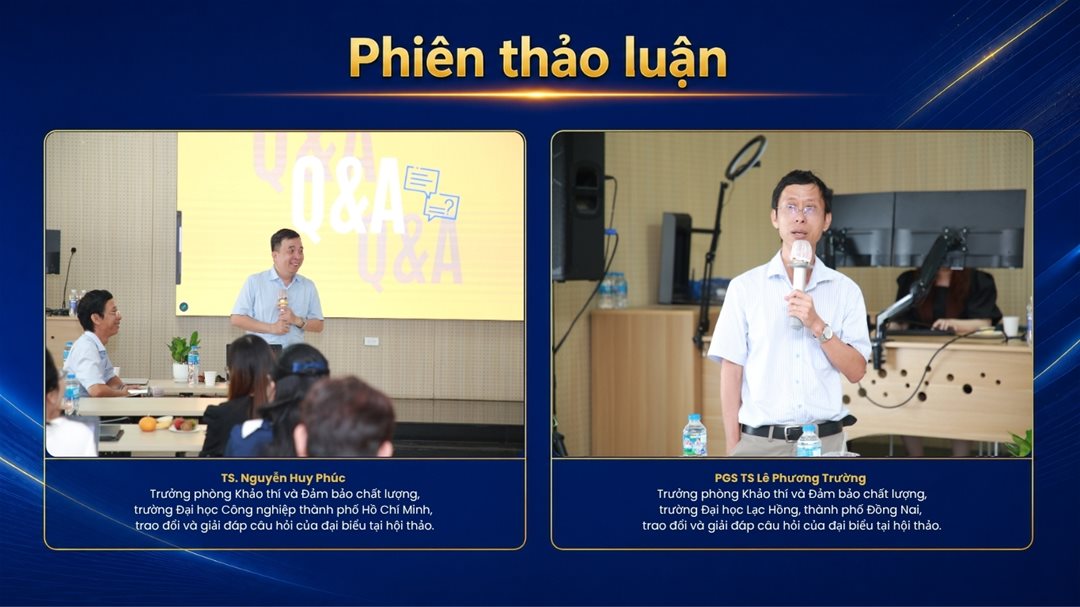
The discussion session featured Assoc. Prof. Dr. Le Phuong Truong, Dr. Nguyen Huy Phuc and representatives from participating institutions. It provided an opportunity for higher education leaders and professionals to discuss challenges in data collection, evidence standardization and impact assessment. Combining perspectives from government regulators, Vietnamese universities and international institutions, the presentations offered practical approaches to developing centralized data systems, standardizing institutional processes, strengthening research capacity and making effective use of international cooperation networks.
As the initiator and organizer, Lac Hong University created a platform for stakeholders to discuss challenges, share experiences and present practical approaches to implementing the SDGs in higher education. The event strengthened connections among government agencies, universities and international partners while creating further opportunities to share models that can be adapted to the circumstances and resources of individual institutions.
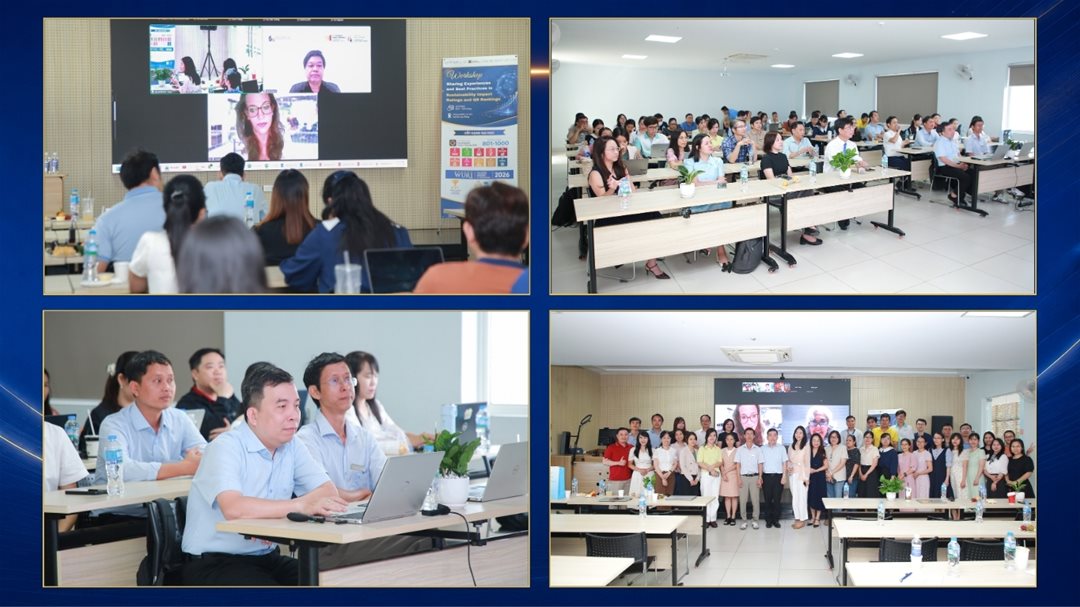
The long-term value of the workshop does not lie in achieving a particular position in an international university ranking. More importantly, participating institutions gained additional insights into building a culture of quality, data-driven governance and academic research. These efforts can contribute to improving education, expanding international cooperation and measuring universities’ social impact more effectively. When ranking criteria are used as tools for reviewing genuine institutional quality and improving university operations, students gain greater access to learning, research, international integration and employment opportunities. Communities also benefit from more practical and sustainable contributions from higher education institutions.
Best practices # workshop # collaboration # cross sectoral dialogue # SDG17
